
Overview
Designed and implemented enterprise content taxonomy and metadata architecture for technology and manufacturing organisations, turning poorly classified content estates into findable, AI-ready assets. Delivered structured controlled vocabularies, faceted classification, metadata schema design, CMS implementation, and governance models with editorial standards and review cycles to maintain quality at scale.
Who This Is For
Technology companies, financial services firms, manufacturers, or large B2B organisations with 1,000-20,000+ employees managing significant volumes of content across internal and external digital channels. Typically operating a CMS or knowledge management system where content is difficult to find, poorly categorised, and inconsistently tagged. Common traits: large content estates with inconsistent or absent metadata, multiple content-producing teams without shared classification standards, AI or personalisation initiatives blocked by content structure issues.
The Challenge
The organisation produces content at scale, but findability is poor. Employees cannot locate internal knowledge. Customers cannot find relevant product or service information. Content is tagged inconsistently, or not tagged at all. Multiple teams use different terminology for the same concepts. The result is content that exists but cannot be surfaced - invisible to search, invisible to AI, invisible to personalisation engines. A taxonomy redesign must reflect how users think about content, how the business organises its knowledge, and how systems need to retrieve and serve it.
What We Propose
Taxonomy Audit & Gap Analysis - Assessment of existing classification, tagging practices, and metadata across content systems. Taxonomy Design - Structured controlled vocabulary, faceted classification, and hierarchical category design aligned to user mental models and business content types. Metadata Framework - Metadata schema covering mandatory and optional fields, controlled values, and tagging guidelines for each content type. CMS Implementation - Configuration of taxonomy and metadata within the CMS including tagging workflows, quality checks, and governance controls. AI & Search Readiness - Taxonomy structured to support semantic search, AI retrieval, and personalisation. Governance & Maintenance - Taxonomy governance model, editorial standards, and review cycles to maintain classification quality as content volumes grow.
Why It Matters
Content findability - Employees and customers locate relevant content accurately, reducing search frustration and support costs. AI readiness - Structured, tagged content that AI systems can retrieve, rank, and surface reliably. Personalisation enablement - Metadata that allows the right content to reach the right audience at the right moment. Operational consistency - Shared classification standards across teams eliminating duplicate effort and conflicting terminology.
Developed a data operations strategy for a professional association to improve member and non-member insights and enable more effective marketing investment decisions. Designed a secure, privacy-compliant data architecture connecting CRM, web analytics and event systems, and implemented data governance processes aligned to GDPR obligations.
Developed a CRM activation strategy and workflow redesign for the advertising sales team of a Nordic digital marketplace, covering both B2B advertiser and B2C platform relationships. Redesigned sales workflows, integrated content and pitch assets into CRM stages, and implemented a pipeline governance model to improve revenue forecasting and sales team adoption.
Led the migration of intranet content for a major food manufacturer, managing the transition of a large, multilingual content estate across platforms without disruption to day-to-day internal communications. Delivered content audit, taxonomy alignment, and structured migration approach covering content across multiple regions and languages.
CMS Architecture for AI-Driven Enterprises
Choosing and Configuring the Right Content Platform for Intelligent Operations
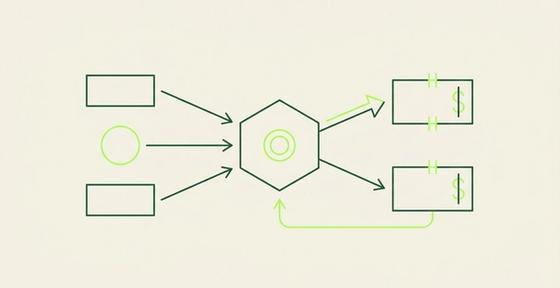
Dries Buytaert: The cost of running multiple CMS platforms
Dries Buytaert argues that running multiple CMS platforms creates hidden operational costs through duplicated integrations, security policies, expertise, and governance. He proposes standardizing on Drupal while using different operating models—SaaS (Acquia Source) for speed and PaaS (Acquia Cloud) for control—to preserve flexibility while reducing fragmentation.