
Overview
Norwegian Seafood Council: supporting multilingual content operations since 2014. One process from source text to live page, across more than a dozen languages and 18 market sites, including an overnight press desk that has delivered the Council’s monthly export release for a 06:00 embargo, every month since October 2014.
Who This Is For
Export promotion bodies, trade associations and membership organisations that run one brand across many markets and languages. This case is most useful if:
- a head office sets the message, while market representatives, local editors or agencies produce content
- you publish consumer sites, B2B training, press releases, statistics, strategy and regulation, often from one small central team
- some content can wait a week, but market figures and press releases can’t wait a morning
- your subject has terminology that generic translation gets wrong, such as species, origin, quality labels or trade regulation
- you want one partner across the content chain, from writing and translation to CMS publishing and information architecture
The Challenge
The Norwegian Seafood Council runs one brand, Seafood from Norway, across many markets: a head office in Tromsø, representatives in 12 countries, and 18 consumer websites from Japan and South Korea to Brazil and the USA, alongside trade content, a media library and joint marketing programmes with industry.
Each market’s consumer site had grown on its own terms. Local editors and agencies produced content independently, which meant duplicated effort, uneven quality, and assets that were hard to find and reuse. Behind that sat three problems:
- No master version. Good content written for one market rarely reached the others.
- Translation stopped at the Word file. Someone still had to build each page in the CMS with the right metadata, images and links.
- Deadlines differed wildly. A recipe could wait a week. The monthly export figures could not wait a morning.
Our Approach
We made content one operation across markets, from source text to live page.
- An English master, then local versions. We audited twelve national sites, ran content strategy workshops in Tromsø and Oslo, and proposed an operating model built on an English master with native-language editors for each market, with defined roles, responsibilities and editorial workflow.
- Translation and publishing as one job. Every web assignment covered the full path:
- non-English sources translated into English first, then into the target language
- a translation pass and a separate quality check for each text
- a web editor building the page in the CMS
- a native speaker’s final check in the CMS before publication
- Original content for the relaunch. For the consumer platform redesign we wrote the core English content (a 31-article fish encyclopedia, the story of sushi, and sections on origin, health and quality), then mapped and migrated content into the new information architecture. German and International English became reference sites for other markets, and we rebuilt the Salmon Academy and Cod Academy B2B training content in the CMS.
- An overnight English press desk. The locked Norwegian export release arrives the afternoon before publication, and the English edition is ready for the 06:00 embargo. It has grown from about 650 to about 3,000 words, with quarterly, half-year and full-year editions on the same cycle.
- Corporate and regulatory material. Departments across the Council now send work directly: species and corporate strategies, sustainability reporting, crisis plans, the Fish Export Act and its regulations, anti-corruption and ethics policies, a trilingual consultation response on Brazilian salted-fish regulation, and marketing plans for China and Hong Kong.
Impact
Continuous delivery since 2014. The English export release has gone out every month since October 2014, delivered overnight against a 06:00 embargo.
More than a dozen languages: English, Norwegian, Swedish, German, French, Italian, Spanish, Portuguese, Polish, Czech, Turkish, Chinese and Japanese.
Speed where it matters:
- four releases totalling 2,912 words in one evening shift
- sixteen species fact sheets in two consecutive days
- a 200-slide consumer study into French within the week
Subject expertise that travels. The same seafood knowledge now supports several of the Council’s exporter members with their own websites and campaign localisation.
For a country-of-origin brand, appearing correctly in AI search and assistants matters more every year. That depends on the same discipline: one master, translated by specialists and checked by native speakers.
Assignments from 2014 through 2020 were delivered while employed at Making Waves (later NoA Ignite), and recent assignments have been delivered directly, independent of any employer. Any public information referenced here is used for identification and does not imply endorsement.
Topics
Delivered Norwegian-to-English translation and QA review of SpareBank 1 Markets' website content, covering their research, corporate finance and capital markets service lines.
Built a data-driven content and channel strategy for Econa, Norway's professional association for economists and business graduates, building on an already-delivered website redesign to reduce member churn.
Built a CRM-connected advertising sales platform for a leading Nordic digital marketplace. Connected audience data, targeting options, advertising formats, pricing and sales contacts into a single self-service portal for advertisers and media agencies, replacing a fragmented sales experience with a repeatable path from research to qualified inquiry.
The Content Infrastructure Imperative
Why AI Amplifies Every Flaw in Your Content Operating System
Dries Buytaert: The cost of running multiple CMS platforms
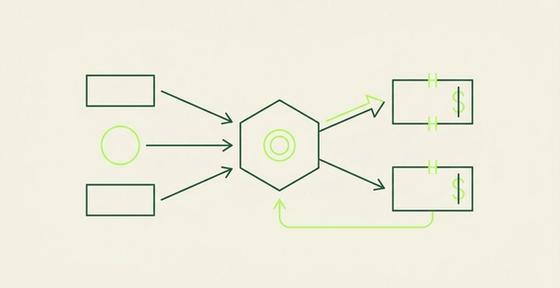
Dries Buytaert argues that running multiple CMS platforms creates hidden operational costs through duplicated integrations, security policies, expertise, and governance. He proposes standardizing on Drupal while using different operating models—SaaS (Acquia Source) for speed and PaaS (Acquia Cloud) for control—to preserve flexibility while reducing fragmentation.
Content-to-Pipeline Check
See how far your content connects to sales, and how much of what sales learns comes back.