
Overview
Content strategy and production for jotun.com's move to a new Optimizely CMS, rebuilding both the corporate site and the full B2B product range across two parallel tracks.
Who This Is For
Global manufacturers and industrial suppliers, typically 2,000 to 20,000+ employees across 10 to 40+ countries. This case is most useful if:
- your website serves commercial buyers and technical specialists at the same time
- your product portfolio spans many lines and market segments
- every market needs localised content
- you are changing CMS and suspect the content needs more than a move
The Challenge
Jotun was moving to Optimizely. The quick version of that project copies every page across and declares the migration finished. Jotun's content needed rebuilding, not relocating, on both the corporate site and the B2B product pages.
The professional range alone ran to dozens of product lines, from hull performance and steel protection to powder coatings, floor coatings and decorative infrastructure. The client also felt the tone of voice had become too formal.
Our Approach
We split the rebuild into two tracks, so each could be written in the tone its audience expects.
- Corporate track: sustainability, careers, innovation and technology, health and safety, leadership and strategy.
- B2B track: solutions, industries, product page types and campaigns, across the full professional range: hull performance top coats and primers, steel protection, speciality and floor coatings, and powder coatings for building components, appliances, pipelines, automotive, furniture and general industries.
- A brief for every page area: the template, the content blocks section by section, and the existing content to adapt, calibrated against yara.com for B2B tone and norvestor.com for corporate.
- Technical groundwork: a full site crawl and SEO research, a proposed tag structure, short-URL handling, cookie-consent implementation and a content governance model, so the editorial rebuild had something to run on.
Impact
Jotun launched with 50% less content, and every page type that remained had a clear owner.
A B2B range buyers can navigate. A complex product navigation became 5 overview pages, one for each business area, with drilldown into 20 segment pages for industries and product clusters. The structure doubled as a governance model from day one.
Two voices, one platform. Corporate and B2B content each read in the tone their audience expects, while shared crawl, SEO, tagging and governance work kept them consistent underneath.
Most organisations carry far more content than they use: Veritas estimated that a third of stored business information is redundant, obsolete or trivial. A CMS migration is the cheapest moment to stop carrying it.
Delivered while employed at NoA Ignite, leading the content and design team. Any public information referenced here is used for identification and does not imply endorsement.
Topics
Delivered Norwegian-to-English translation and QA review of SpareBank 1 Markets' website content, covering their research, corporate finance and capital markets service lines.
Built a data-driven content and channel strategy for Econa, Norway's professional association for economists and business graduates, building on an already-delivered website redesign to reduce member churn.
Built a CRM-connected advertising sales platform for a leading Nordic digital marketplace. Connected audience data, targeting options, advertising formats, pricing and sales contacts into a single self-service portal for advertisers and media agencies, replacing a fragmented sales experience with a repeatable path from research to qualified inquiry.
The Content Infrastructure Imperative
Why AI Amplifies Every Flaw in Your Content Operating System
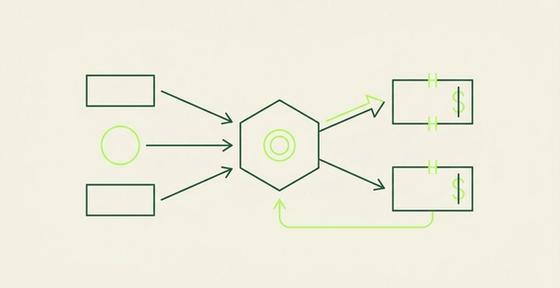
Dries Buytaert: The cost of running multiple CMS platforms
Dries Buytaert argues that running multiple CMS platforms creates hidden operational costs through duplicated integrations, security policies, expertise, and governance. He proposes standardizing on Drupal while using different operating models—SaaS (Acquia Source) for speed and PaaS (Acquia Cloud) for control—to preserve flexibility while reducing fragmentation.
Content-to-Pipeline Check
See how far your content connects to sales, and how much of what sales learns comes back.