
Overview
Iterative, data-driven improvement of Ruter's journey planner and website, combining analytics, testing and design sprints to help millions of monthly visitors find the right route.
Who This Is For
Public transport authorities and other public services whose websites carry millions of visits from people trying to complete one core task. This case is most useful if:
- much of your content does not address the problems users actually have
- your audience is unusually broad
- you want every design or content change measured against a clear KPI
- you need to explore new service concepts without committing engineering time too early
The Challenge
Ruter's website is visited millions of times a month by people looking for public transport information in the Oslo area. One of Ruter's core goals is preventing population growth from translating into more car use.
Ruter's own research had found that less than half of the content served through its channels addressed the problems its users had, across an unusually broad audience to design for.
Our Approach
The team now behind ECM.DEV managed the team of consultants delivering the engagement.
- Evidence from every angle: Google Analytics data, surveys, A/B tests and user testing combined, quantitative and qualitative together, to show what stood between users and their core task.
- A KPI for every change: each design change, content improvement or code optimisation had a measurable answer to whether it worked, for example whether it correctly showed the stops for the route a user wanted.
- Design sprints: a dedicated team ran Google Design Sprints in two-week cycles to explore future ticketing and payment concepts, prototyping and user-testing ideas before committing engineering time.
Impact
Journey searches up 19% in 2016, driven largely by an improved journey planner.
Less typing, more mobile. Use of "my location" in journey searches nearly doubled, and mobile journey searches rose 26% as the site became significantly more mobile-friendly.
Faster from idea to prototype. A Ruter business developer summed up the design-sprint work: "We'd talked about this for two years, and now we built it in five days."
When content serves one core task, every change can be measured against it. That is what turned opinion into evidence here.
Managed the Making Waves (later NoA Ignite) consulting team covering analytics, design, testing and content operations. Any public information referenced here is used for identification and does not imply endorsement.
Topics
Delivered Norwegian-to-English translation and QA review of SpareBank 1 Markets' website content, covering their research, corporate finance and capital markets service lines.
Built a data-driven content and channel strategy for Econa, Norway's professional association for economists and business graduates, building on an already-delivered website redesign to reduce member churn.
Built a CRM-connected advertising sales platform for a leading Nordic digital marketplace. Connected audience data, targeting options, advertising formats, pricing and sales contacts into a single self-service portal for advertisers and media agencies, replacing a fragmented sales experience with a repeatable path from research to qualified inquiry.
CMS Architecture for AI-Driven Enterprises
Choosing and Configuring the Right Content Platform for Intelligent Operations
Dries Buytaert: The cost of running multiple CMS platforms
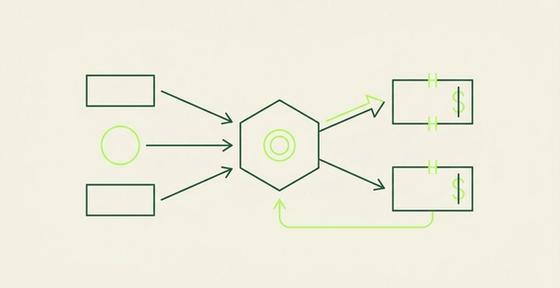
Dries Buytaert argues that running multiple CMS platforms creates hidden operational costs through duplicated integrations, security policies, expertise, and governance. He proposes standardizing on Drupal while using different operating models—SaaS (Acquia Source) for speed and PaaS (Acquia Cloud) for control—to preserve flexibility while reducing fragmentation.
Content-to-Pipeline Check
See how far your content connects to sales, and how much of what sales learns comes back.