ECM.DEV

Go-to-Market Systems

Your CMS, marketing tools and CRM working as one, so content, leads and customer data reach sales without anyone retyping them.

Your content, marketing and sales tools each work. Together, they don't.

Most go-to-market problems are not caused by a bad tool. They happen in the space between tools: the CMS that does not know which content sales actually uses, the marketing platform whose leads arrive in the CRM without context, the reports nobody trusts because each system counts differently. People fill the gaps by copying, exporting and retyping, and the licences renew anyway.

The fix is rarely another platform. It is making the stack you already pay for work as one: content, marketing automation, CRM and analytics connected, so content, leads and customer data reach the people who need them, and increasingly the AI tools that work alongside them.

You probably recognise this

  • •Selection: tools were chosen on feature lists and demos, not how teams work, so you pay enterprise licences for features no one touches.
  • •Architecture: your content model fights how content is really made and reused, taxing every project with workarounds.
  • •Integration: CMS, DAM, analytics, and CRM don't talk, so staff re-enter the same data by hand: hours a week, every week.
  • •Migration: the last replatform copied the old mess into a new system, so you paid to rebuild the same problems.
  • •Findability: people and AI tools can't reliably find what's published, so it gets recreated instead of reused.
  • •Adoption: the platform can do it, but people work around it: you're paying for capability you don't use.
  • •Governance: every team configures the tools their own way, and the inconsistency compounds with each release.
  • •Measurement: you can't connect what the stack costs to what it returns, so renewals get rubber-stamped on faith.

Where to start

Where do content, leads and customer data get stuck between your tools?

The same four steps as every service. Each fee is fixed before work starts, and no step commits you to the next.

  1. Step 1: Check

    Go-to-Market Stack Check

    See in about 4 minutes how well your content, marketing and sales tools work together, and where leads and data get stuck between them. Based on your own answers.

    Fee: Free

  2. Step 2: Diagnose

    Go-to-Market Systems Diagnostic

    We map how content, customer and sales data move between your CMS, marketing tools and CRM, and where they stall, get retyped or go missing. You see what is holding the stack back, with the evidence, and a fixed-fee scope for the first fix.

    Fee: €2,000 to €3,000, fixed before we start

  3. Step 3: Fix

    First project

    We make the tools you already pay for work together: content, marketing automation, CRM and analytics, so leads, content and insight reach sales without manual work. No migration unless it is truly needed.

    Fee: Fixed fee, set in the Statement of Work

  4. Step 4: Improve

    Ongoing support

    Optional. We keep the stack working together as tools, integrations and AI features change, and take on the next priority each month. Stopping after the first project is a good outcome.

    Fee: Monthly, scoped separately

    Agreed only after a first project

What the Diagnostic includes, and the larger Full Estate AuditProblem is the CMS itself? Take the Platform or Setup Check (4 min)

Tools don't deliver outcomes: the system around them does. We pin down where your stack actually breaks down (selection, architecture, integration, findability) and rebuild that layer, so the platforms you've already paid for finally perform.

What we do

01

CMS audit and operational redesign

We examine your CMS configuration, workflow design, template architecture, and governance model, not just the platform settings. We identify where publishing friction is introduced, where ownership breaks down, and where the system is working against the team rather than for it. The output is an implementable redesign, not a capability assessment.

What this delivers

  • •A clear diagnosis of where your CMS is failing and why
  • •Redesigned workflows, templates, and configuration aligned with how teams actually work
  • •Faster publishing with fewer workarounds
  • •A CMS that teams use rather than route around
02

Content architecture and metadata design

We design the content models and metadata frameworks that determine whether your content is findable, reusable, and AI-ready. This is the foundational work that most platform implementations skip, and the gap that explains why personalisation fails, search underperforms, and localisation costs more than it should.

What this delivers

  • •Structured content models designed for reuse across channels and markets
  • •A metadata framework that makes content findable and machine-readable
  • •The structural foundation for AI tools to work reliably
  • •Reduced duplication and redundant production effort

03

Marketing technology integration and content flow design

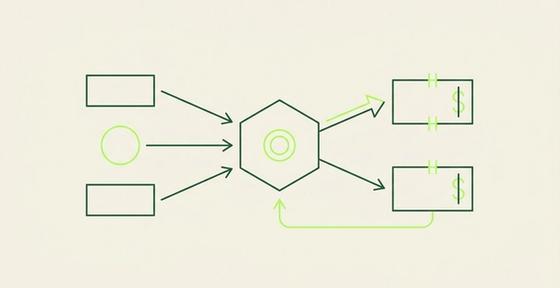
We connect your content platform with the wider digital ecosystem (analytics, marketing automation, CRM, personalisation engines) and design the data flows that allow content to move correctly between systems. The goal is not integration for its own sake. It is content that reaches the right context with the right data attached.

What this delivers

  • •Content that flows correctly between CMS, CRM, and marketing automation
  • •Analytics that reflect real content performance, not platform activity
  • •A connected stack that reduces manual export and duplication
  • •The data foundation that personalisation and AI tools require

Not sure which of these you need? Tell us what is going wrong.

Start a conversation

See how well your content, marketing and sales tools work together, and where leads and data get stuck between them.

Take the Go-to-Market Stack Check →

Step 2: Diagnose

Deeper proof, when you need it in writing.

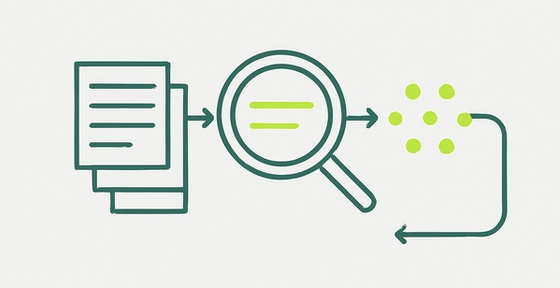
ecm-agent scans your actual content estate rather than relying on self-reporting. Two depths, both with a fixed fee. Each ends with a fixed-fee scope for the first fix; the fix itself (step 3) is agreed separately, in a written Statement of Work.

Diagnostic: first real proof

Go-to-Market Systems Diagnostic

€2,000 to €3,000

5 to 7 business days · a sample of 50 to 100 items, about a tenth of your estate

ecm-agent scans a sample of 50 to 100 items, about a tenth of your estate, and a consultant reviews the results. You get the five problems costing you most, ranked, each with the evidence, and one or two of them shown failing in a live AI answer about your business. A 5 to 10 page report and a 45-minute recorded readout.

The full fee is credited against your first project if you sign it within 30 days.

Discuss a Diagnostic

Whole estate: board-ready

Full Estate Audit

€12,000 to €15,000

3 to 4 weeks · your whole content estate, up to 5,000 items

Your whole content estate, up to 5,000 items. A 20 to 30 page report written for a board, with a remediation roadmap that has each step costed and sequenced. A 90-minute readout for your stakeholders, plus two weeks of follow-up questions answered in writing.

Discuss a Full Estate Audit

What your fee will be

The fee is fixed before we start. Tick what is true of your content:

What is true of your content

Your fee

Diagnostic€2,000

Full Estate Audit€12,000

  1. None ticked€2,000€12,000
  2. One ticked€2,500€13,500
  3. Two or three ticked€3,000€15,000

Top figure: Diagnostic. Lower figure: Full Estate Audit.

These fees cover up to three languages and three systems, and estates up to 5,000 items for the Full Estate Audit. Beyond that we quote separately.

What counts as an item?

An item is one published piece of content with its own address: a web page, an article, or a standalone document such as a PDF.

Counted: Product and service pages, articles and blog posts, support and help articles, landing pages, and standalone documents (PDFs, datasheets, whitepapers) published at their own link.

Not counted: Navigation, search results, tag and listing pages, images and video, pages that redirect elsewhere, and duplicates of the same content at a second address.

Each language version is a separate item. A Diagnostic covers up to three languages, and the sample is drawn across them.

Your estate is the number of countable items in the languages covered. A Diagnostic samples 10% of it, at least 50 items and at most 100. If you have fewer than 50 items, we review all of them.

All prices exclude VAT where applicable. See what a Diagnostic report looks like (illustrative sample)

Who does the work

Senior ownership for the work between expertise, content and sales.

We help your team turn specialist knowledge into clear, approved material and repeatable workflows, connecting the people, information and systems that keep an opportunity moving from first enquiry to proposal.

Start with one defined project. If you need continued support, the person who scoped it leads agreed priorities, coordinates contributors and keeps approvals moving, with a scope and rhythm that fit your team.

Go deeper on Go-to-Market Systems

Five short explainers on how content, leads and customer data move between your website, marketing tools and CRM, and where they get stuck.

Guides on this topic

All guides →

Case studies

All projects →

Recent thinking

All articles →

Self-assessments

All assessments →

We use cookies to understand how visitors use our site and to improve your experience. Privacy policy