
Overview
A sitewide title tag and meta description matrix, plus product page copywriting, for a Nordic browser software company's global website.
Who This Is For
Technology companies, financial services firms, manufacturers, or large B2B organisations with 1,000-20,000+ employees managing significant volumes of content across internal and external digital channels. Typically operating a CMS or knowledge management system where content is difficult to find, poorly categorised, and inconsistently tagged. Common traits: large content estates with inconsistent or absent metadata, multiple content-producing teams without shared classification standards, AI or personalisation initiatives blocked by content structure issues.
The Challenge
The client's browser software website spanned dozens of distinct page types: product downloads by platform (Windows, Mac, Linux, Android, iOS), regional and older-device variants, developer resources, error pages, careers, press and business landing pages. Title tags and meta descriptions had grown inconsistent over time, duplicated across pages, written without regard for search-results character limits, or missing keyword targeting entirely. The core product pages (Desktop, Mobile, Tablet) also needed refreshed copy that connected feature messaging to the terms people were actually searching for, rather than internal product language.
What We Propose
Russell worked within Making Waves' content and SEO team on the account, producing: Sitewide Title Tag & Meta Description Matrix - keyword-mapped title tags and meta descriptions for close to 30 page types across download, developer, support, careers, press and business sections, with character counts checked page by page so listings wouldn't truncate in search results. Product Page Copy Options - alternative headlines, sub-headlines and feature-USP copy for the Desktop, Mobile and Tablet product pages, each option tied to a list of existing and potential target keywords. Stakeholder Review Structure - copy delivered as dated, versioned options so the client's marketing team could compare, select and approve before anything went live.
Why It Matters
Search visibility - consistent, keyword-targeted titles and descriptions across the full page inventory, rather than page-by-page guesswork. Messaging clarity - product copy anchored to real search terms instead of internal jargon. A repeatable system - the matrix format turned metadata from one-off copywriting into a structure the client's own team could maintain and extend as new pages launched, the same content-as-system thinking behind ECM.DEV's approach today.
This work was delivered while Russell was employed at Making Waves, as part of the content and SEO team working on the client's global website. Any public information referenced here is used for identification and does not imply endorsement.
Over several years, delivered repeated cycles of content strategy, content production and content localisation in up to 20 European and Asian languages for a global industry association serving the seafood sector. Covered web content across three CMS platforms simultaneously, localisation of reports, infographics, video and complex presentations, and multilingual SEO for organic discovery across priority export markets.
Developed a data operations and digital-experience strategy for a global professional association serving members and professional audiences across almost 200 countries. Mapped how data moved between association-management, CRM, web analytics, email marketing, ecommerce, event-registration and learning systems to build a complete, privacy-compliant view of engagement.
Built a CRM-connected advertising sales platform for a leading Nordic digital marketplace. Connected audience data, targeting options, advertising formats, pricing and sales contacts into a single self-service portal for advertisers and media agencies, replacing a fragmented sales experience with a repeatable path from research to qualified inquiry.
The Content Lifecycle Redesigned
How AI Changes Every Stage from Creation to Retirement
Dries Buytaert: The cost of running multiple CMS platforms
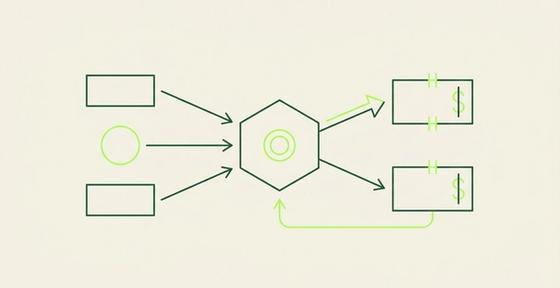
Dries Buytaert argues that running multiple CMS platforms creates hidden operational costs through duplicated integrations, security policies, expertise, and governance. He proposes standardizing on Drupal while using different operating models—SaaS (Acquia Source) for speed and PaaS (Acquia Cloud) for control—to preserve flexibility while reducing fragmentation.